
The Organisyl® technology: engineering the ultimate biomimetic 3D microenvironment
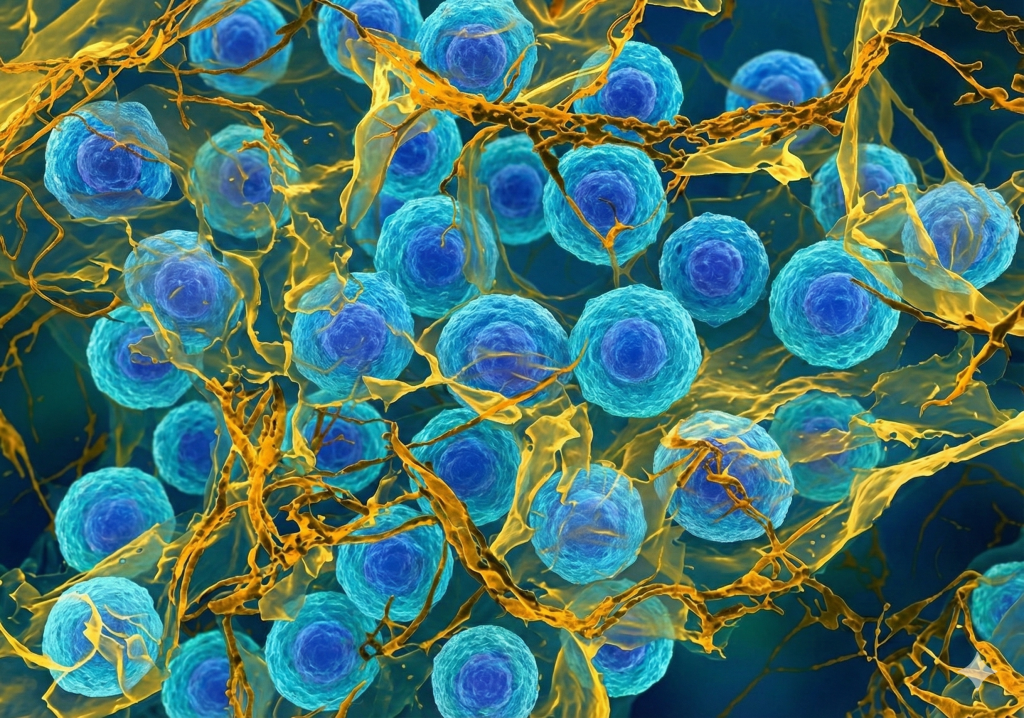
The scientific imperative: Bridging the translational gap in drug research, cosmetology and cell biology in general
For decades, the discovery of new drugs and the development of dermocosmetics have relied on in vitro models that fail to replicate the physiological reality of human tissue. When cells are cultivated on rigid plastic—a material with an elastic modulus exceeding that of human bone (>20 GPa)—their mechanical environment is fundamentally altered. This extreme stiffness disrupts natural gene expression, cell migration, and differentiation, rendering the resulting biological data highly unreliable.
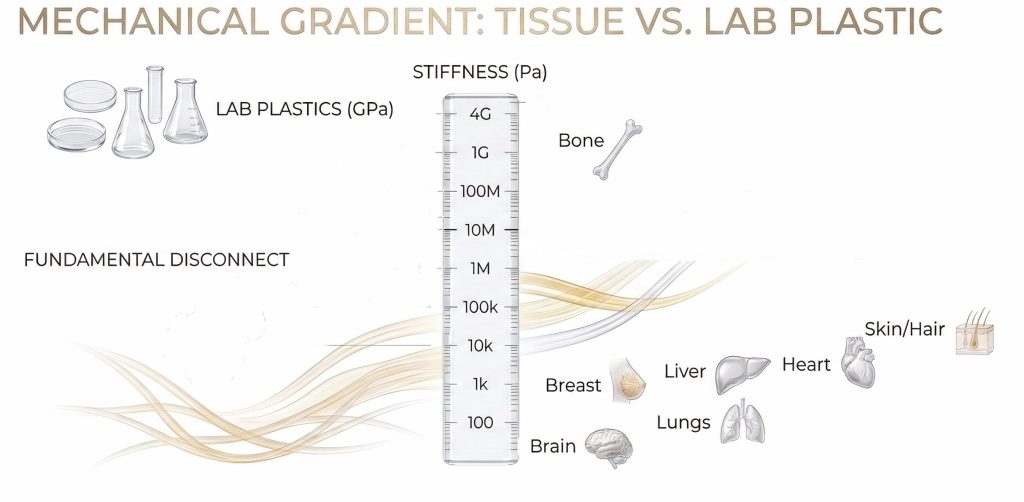
The Organisyl® process is the culmination of over 30 years of public-private R&D, driven by the last 10 years of intensive work by researchers Nathalie MAUBON and Méryl ROUDAUT. To overcome the biological limitations of standard models, they pioneered a completely new approach: combining chemical innovation with a unique physical state-change process to transform basic hydrogels into functional, organ-specific Physioscaffolds™.
Decoding the Human Extracellular Matrix (ECM)
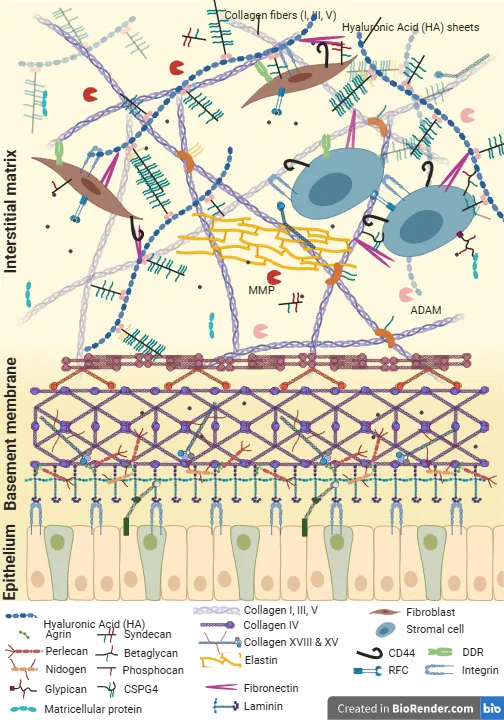
To truly replicate in vivo biology, one must recreate the Extracellular Matrix (ECM). The ECM is not merely structural support; it is a 3D viscoelastic network of macromolecules secreted by resident mesenchymal cells (primarily fibroblasts) that actively regulates cell development, migration, proliferation, differentiation, and spatial architecture (Hu et al., 2022).
The native ECM is highly tissue-specific and consists of two primary environments:
Pericellular Matrices (Basement Membrane): Located at the interface between connective tissue and parenchyma, directly contacting epithelial and endothelial cells. It consists of two interconnected networks of type IV collagen and laminins, interacting with nidogens, integrins, perlecan, aggrecan, and collagens (types VII, XV, XVIII).
Interstitial Matrices (Stroma): The connective tissue foundation guaranteeing physical integrity, pH maintenance, hydration, and the availability of cytokines/growth factors. It is composed of structural elements (proteoglycans and glycosaminoglycans [GAGs], with Hyaluronic Acid being the primary non-sulfated GAG) and adhesion proteins (e.g., laminin, fibronectin).
The central role of Hyaluronic Acid (HA) in mechanobiology
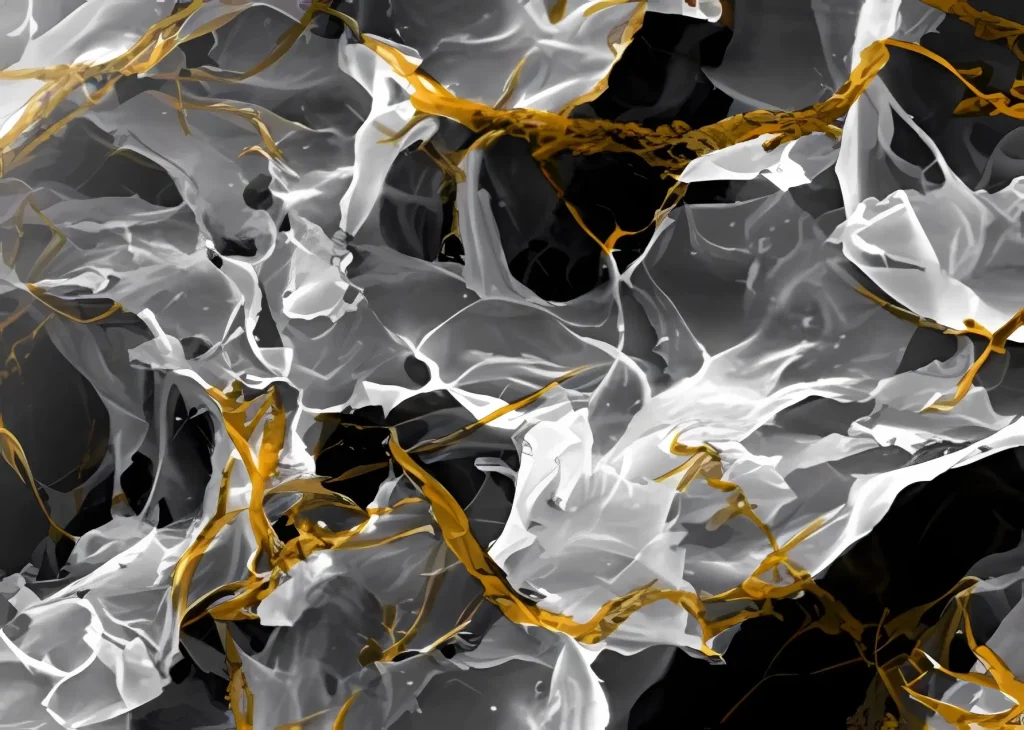
Hyaluronic Acid (HA) is the cornerstone of the Organisyl® technology. Unlike sulfated GAGs (like chondroitin sulfate or heparin), HA is a non-sulfated linear polysaccharide (composed of D-glucuronic acid and D-N-acetylglucosamine) devoid of a major protein core.
HA provides essential resistance to compression, lubrication, and profound tissue plasticity due to its exceptional water retention capabilities. Beyond its structural role, HA actively interacts with cell surface receptors, notably CD44 and RHAMM (Receptor for Hyaluronan-Mediated Motility). These interactions are vital for signal transduction, pericellular matrix assembly, and modulating cellular proliferation and migration during tissue repair and regeneration.
The Organisyl® breakthrough: A two-step patented process
Existing 3D systems face severe limitations: scaffold-free systems lack matrix signaling entirely; traditional hydrogels lack solid elements, have very low porosity (encapsulating cells and limiting gas/nutrient exchange); and solid synthetic scaffolds lack specific cell adhesion sites, exhibiting high rigidity and zero elasticity.
Organisyl® solves these issues through a precise, two-step manufacturing process:
Step 1: The Chemical Process (Biomimetic Formulation) We begin by chemically crosslinking Hyaluronic Acid grafted with precise physiological quantities of fibronectin, type 1 collagen and other major matrix components such as different type of collagens, elastin, laminin, and sulfated GAGs. This creates a highly specific, viscous biomimetic hydrogel.
Step 2: The Physical Process (State-Change to Physioscaffold™) To overcome the encapsulation and porosity limits of standard hydrogels, Organisyl® employs a proprietary physical process that changes the state of the hydrogel. This transforms the viscous gel into a solid, highly porous Physioscaffold™. This final structure perfectly replicates the porosity, stiffness, and elastic-dominant viscoelasticity of the native organ’s ECM.
Tuning organ-specific stiffness and viscoelasticity
Mechanobiology dictates that cells behave differently depending on the stiffness of their environment. A liver cell will not function correctly on a scaffold designed for bone. Organisyl® precisely tunes the physical properties of each Physioscaffold™ to match the specific organ or pathological state being studied.
Our matrices exhibit an elastic-dominant viscoelasticity, meaning that across all tested frequencies, the Storage Modulus (G′) remains strictly higher than the Loss Modulus (G″)—a crucial hallmark of living human tissue.
Mechanical properties of native tissues
| Organ/Tissue | G’ (kPa) | G” (kPa) |
| Brain | 0.1–1 | 0.05–0.3 |
| Lung | 0.3–3 | 0.1–0.7 |
| Liver | 0.5–5 | 0.1–1 |
| Kidney | 0.5–6 | 0.2–1.2 |
| Heart | 2–15 | 0.3–2 |
| Skin (Dermis) | 10–30 | 2–8 |
| Bone (non-mineralized) | 10–100 | 1–10 |
Cell culture protocol: how cells interact with Physioscaffolds™
The practical application of Organisyl® technology in the laboratory is highly streamlined for scientific efficiency.
Physioscaffolds™ are delivered in a lyophilized (freeze-dried) state prior to sterilization. To initiate a culture or create an in vitro organoid, scientists simply seed the cells in a minimal volume of medium (identical to the original cast hydrogel volume) directly onto the lyophilized scaffold.
Because the heavily crosslinked HA retains its hydrophilic functional groups (facilitating hydrogen bonding with water), the Physioscaffold™ acts like a biological sponge. It instantly absorbs the cell-infused medium. Unlike synthetic solid scaffolds where cells blindly cluster in inert cavities, cells within a Physioscaffold™ actively penetrate the highly porous matrix and immediately bind to the specific adhesion proteins (like fibronectin) grafted during the chemical phase. The result is a thriving, functional cell population that remains viable for significantly longer period of time.
Comparative advantage over existing 3D systems
Our patented process explicitly addresses and overcomes the shortfalls of every major alternative on the market.
| Characteristics | No matrix | Solid scaffold | Hydrogel | Organisyl® | Decellularized ECM |
|---|---|---|---|---|---|
| Process | N/A | Physical process | Chemical crosslinking | Chemical + physical | Cell lysis |
| Solid scaffold | ❌ | ✅ | ❌ | ✅ | ✅ |
| Cell-matrix interaction | ❌ | ❌ | ✅ | ✅ | ✅ |
| Mechanical properties | ❌ N/A | ❌ Plastic | ❌ Viscous | ✅ Viscoelastic (elastic dominant) | ✅ Viscoelastic (elastic dominant) |
| Porosity | ❌ | ✅ | ❌ | ✅ | ✅ |
| Organ-specific stiffness | ❌ | ❌ | ✅ / ❌ | ✅ | ✅ |
| Batch to batch consistancy | ✅ | ✅ | ❌ | ✅ | ❌ |
| Industrializable for screening | ✅ | ✅ | ❌ | ✅ | ❌ |
Organisyl® offers the gold standard: the biological fidelity of a decellularized ECM, combined with the reproducibility, scalability, and high-throughput industrialization capabilities of a synthetic platform.
Organisyl® References
Existing publications originate from processes prior to Organisyl®
- Pliner L, Laneret N, Roudaut M, Mogrovejo-Valdivia A, Vandenhaute E, Maubon N, Toillon RA, Karrout Y, Treizebre A, Annicotte JS. Mechanical and functional characterisation of a 3D porous biomimetic extracellular matrix to study insulin secretion from pancreatic β-cell lines. In Vitro Model. 2024 Oct 25;3(4-6):205-218. doi: 10.1007/s44164-024-00078-z. eCollection 2024 Dec.PMID: 39872697
- Cicero J, Trouvilliez S, Palma M, Ternier G, Decoster L, Happernegg E, Barois N, Van Outryve A, Dehouck L, Bourette RP, Adriaenssens E, Lagadec C, Tarhan CM, Collard D, Souguir Z, Vandenhaute E, Maubon G, Sipieter F, Borghi N, Shimizu F, Kanda T, Giacobini P, Gosselet F, Maubon N, Le Bourhis X, Van Seuningen I, Mysiorek C, Toillon RA. ProNGF promotes brain metastasis through TrkA/EphA2 induced Src activation in triple negative breast cancer cells. Exp Hematol Oncol. 2023 Dec 10;12(1):104. doi: 10.1186/s40164-023-00463-6.PMID: 38072918 .
- Messelmani T, Le Goff A, Soncin F, Souguir Z, Merlier F, Maubon N, Legallais C, Leclerc E, Jellali R.J Coculture model of a liver sinusoidal endothelial cell barrier and HepG2/C3a spheroids-on-chip in an advanced fluidic platform. Biosci Bioeng. 2024 Jan;137(1):64-75. doi: 10.1016/j.jbiosc.2023.10.006. Epub 2023 Nov 14.PMID: 37973520
- Messelmani T, Le Goff A, Soncin F, Gilard F, Souguir Z, Maubon N, Gakière B, Legallais C, Leclerc E, Jellali R. Investigation of the metabolomic crosstalk between liver sinusoidal endothelial cells and hepatocytes exposed to paracetamol using organ-on-chip technology. Toxicology. 2023 Jun 15;492:153550. doi: 10.1016/j.tox.2023.153550. Epub 2023 May 19. PMID: 37209942.
- Messelmani T, Le Goff A, Souguir Z, Maes V, Roudaut M, Vandenhaute E, Maubon N, Legallais C, Leclerc E, Jellali R. Development of Liver-on-Chip Integrating a Hydroscaffold Mimicking the Liver’s Extracellular Matrix. Bioengineering (Basel). 2022 Sep 5;9(9):443. doi: 10.3390/bioengineering9090443. PMID: 36134989; PMCID: PMC9495334.
- Tarek Maylaa, Feryal Windal, Halim Benhabiles, Gregory Maubon, Nathalie Maubon, Elodie Vandenhaute, Dominique Collard. An evaluation of computational learning-based methods for the segmentation of nuclei in cervical cancer cells from microscopic images. Curr Comput Aided Drug Des. 2022 Feb 8. doi: 10.2174/1573409918666220208120756
- De Conto V, Cheung V, Maubon G, Souguir Z, Maubon N, Vandenhaute E, Bérézowski V. In vitro differentiation modifies the neurotoxic response of SH-SY5Y cells. Toxicol In Vitro. 2021 Aug 20;77:105235.
- Javier Munoz-Garciaab, Camille Jubelin, Aurélie Loussouarn, Matisse Goumard, Laurent Griscom, Axelle Renodon-Cornière, Marie-Françoise Heymann, Dominique Heymann. In vitro three-dimensional cell cultures for bone sarcomas. Journal of Bone Oncology, Volume 30, October 2021, 100379
- Dimas Carolina Belisario et al. ABCA1/ABCB1 Ratio Determines Chemo- and Immune-Sensitivity in Human Osteosarcoma. Cells 2020, 9(3), 647
- Vitali E, Boemi I, Tarantola G, Piccini S, Zerbi A, Veronesi G, Baldelli R, Mazziotti G, Smiroldo V, Lavezzi E, Spada A, Mantovani G, Lania AG. Metformin and Everolimus: A Promising Combination for Neuroendocrine Tumors Treatment. Cancers (Basel). 2020 Aug 2;12(8):2143.
- Bubba F, Pouchol C, Ferrand N, Vidal G, Almeida L, Perthame B, Sabbah M. A chemotaxis-based explanation of spheroid formation in 3D cultures of breast cancer cells. J Theor Biol. 2019 Oct 21;479:73-80.
- Lane R, Simon T, Vintu M, Solkin B, Koch B, Stewart N, Benstead-Hume G, Pearl FMG, Critchley G, Stebbing J, Giamas G. Cell-derived extracellular vesicles can be used as a biomarker reservoir for glioblastoma tumor subtyping. Commun Biol. 2019 Aug 19;2:315.
- Salaroglio IC, Gazzano E, Abdullrahman A, Mungo E, Castella B, Abd-Elrahman GEFA, Massaia M, Donadelli M, Rubinstein M, Riganti C, Kopecka J. Increasing intratumor C/EBP-β LIP and nitric oxide levels overcome resistance to doxorubicin in triple negative breast cancer. J Exp Clin Cancer Res. 2018 Nov 27;37(1):286.
- Simon T, Pinioti S, Schellenberger P, Rajeeve V, Wendler F, Cutillas PR, King A, Stebbing J, Giamas G. Shedding of bevacizumab in tumour cells-derived extracellular vesicles as a new therapeutic escape mechanism in glioblastoma. Mol Cancer. 2018 Aug 31;17(1):132.
- Louis F, Pannetier P, Souguir Z, Le Cerf D, Valet P, Vannier JP, Vidal G, Demange E. A biomimetic hydrogel functionalized with adipose ECM components as a microenvironment for the 3D culture of human and murine adipocytes. Biotechnol Bioeng. 2017 Aug;114(8):1813-1824.
- Salaroglio IC, Panada E, Moiso E, Buondonno I, Provero P, Rubinstein M, Kopecka J, Riganti C. PERK induces resistance to cell death elicited by endoplasmic reticulum stress and chemotherapy. Mol Cancer. 2017 May 12;16(1):91.
- Gomes A, Russo A, Vidal G, Demange E, Pannetier P, Souguir Z, Lagarde JM, Ducommun B, Lobjois V. Evaluation by quantitative image analysis of anticancer drug activity on multicellular spheroids grown in 3D matrices. Oncol Lett. 2016 Dec;12(6):4371-4376.
- Abdoul-Azize S, Buquet C, Li H, Picquenot JM, Vannier JP. Integration of Ca2+ signaling regulates the breast tumor cell response to simvastatin and doxorubicin. Oncogene. 2018 Sep;37(36):4979-4993
- Simon T, Coquerel B, Petit A, Kassim Y, Demange E, Le Cerf D, Perrot V, Vannier JP. Direct effect of bevacizumab on glioblastoma cell lines in vitro. Neuromolecular Med. 2014 Dec;16(4):752-71.
- Demange E, Kassim Y, Petit C, Buquet C, Dulong V, Cerf DL, Buchonnet G, Vannier JP. Survival of cord blood haematopoietic stem cells in a hyaluronan hydrogel for ex vivo biomimicry. J Tissue Eng Regen Med. 2013 Nov;7(11):901-10.
- David L, Dulong V, Le Cerf D, Cazin L, Lamacz M, Vannier JP. Hyaluronan hydrogel: an appropriate three-dimensional model for evaluation of anticancer drug sensitivity. Acta Biomater. 2008 Mar;4(2):256-63.
- David L, Dulong V, Le Cerf D, Chauzy C, Norris V, Delpech B, Lamacz M, Vannier JP. Reticulated hyaluronan hydrogels: a model for examining cancer cell invasion in 3D. Matrix Biol. 2004 Jun;23(3):183-93.
ee