
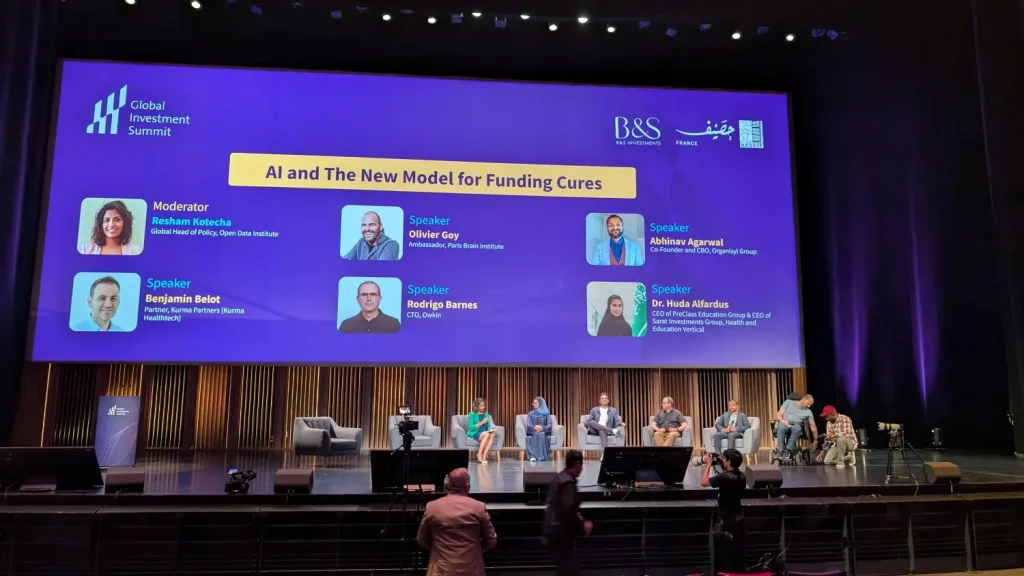
At the recent Global Investment Summit in Paris, key figures across technology, venture capital, and biotechnology gathered at the Palais des Congrès to address one of the most pressing challenges in modern healthcare: how to reshape the funding and development models for transformative cures. Representing Organisyl, Co-founder Abhinav Agarwal joined fellow industry leaders on the panel “AI and The New Model for Funding Cures” to share our perspective on overcoming the structural bottlenecks of preclinical drug discovery.
The central issue facing pharmaceutical development today remains the staggering clinical failure rate, which continues to hover around 90%. Traditional preclinical screening relies heavily on simplistic 2D cell cultures or non-human animal models, neither of which accurately replicates human tissue biology. Consequently, candidates that appear promising in early testing frequently fail during expensive clinical trials due to unpredicted toxicity or lack of efficacy. This high rate of attrition inflates overall development costs and creates severe financial risk across the entire pipeline.
While Artificial Intelligence has emerged as a powerful tool to accelerate molecular design, algorithm-driven discovery is fundamentally constrained by the quality of its training data. Algorithms trained on inaccurate or non-physiological biological models inevitably yield flawed predictions, reinforcing the classic “garbage in, garbage out” dilemma. For AI to truly de-risk drug development, it must be fueled by high-fidelity, human-relevant biological datasets generated under conditions that faithfully mirror actual human pathology.
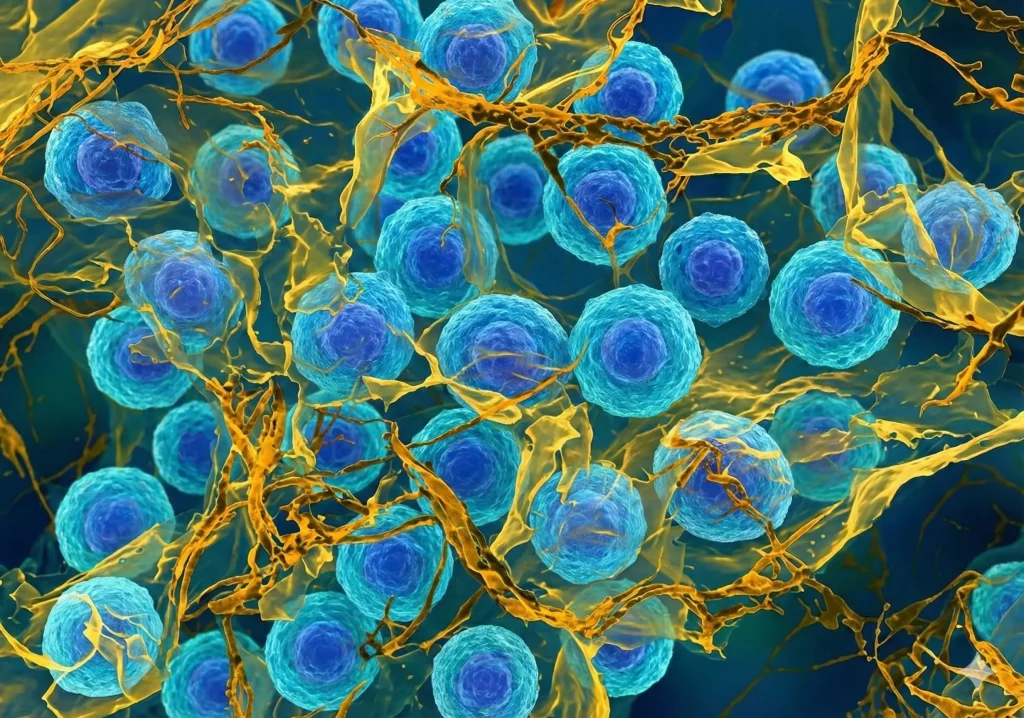
This necessity defines Organisyl’s approach. Through our proprietary Physioscaffold technology, we recreate the physiological human extracellular matrix in vitro, providing cells with the exact structural and mechanical cues they experience in human tissue. By generating high-fidelity, “AI-Ready” physiological data, our platform delivers true upstream predictability. This enables researchers and drug developers to identify failure points early, optimize drug leads with greater precision, and significantly lower the financial barrier to entry for any therapeutic program.
While this predictive capability enhances efficiency across all therapeutic areas, it plays a particularly decisive role in underserved sectors such as rare diseases. Historically, pathologies with small patient populations have struggled to attract R&D capital because the traditional, high-attrition development model made the return on investment economically unviable. By reducing preclinical failure rates and lowering early-stage research costs, predictive human-relevant models make drug discovery for rare pathologies financially sustainable for the first time.
We extend our sincere thanks to the organizers of the Global Investment Summit for convening this critical discussion, as well as to our distinguished co-panelists—Benjamin Belot, Rodrigo Barnes, Dr. Huda Alfardus, Olivier Goy, and Resham Kotecha—for sharing their valuable insights. Collaborating with dedicated professionals who share a commitment to advancing healthcare models is a profound source of motivation for our team as we continue building the foundation for predictive, data-driven medicine.